
The Tea Act!
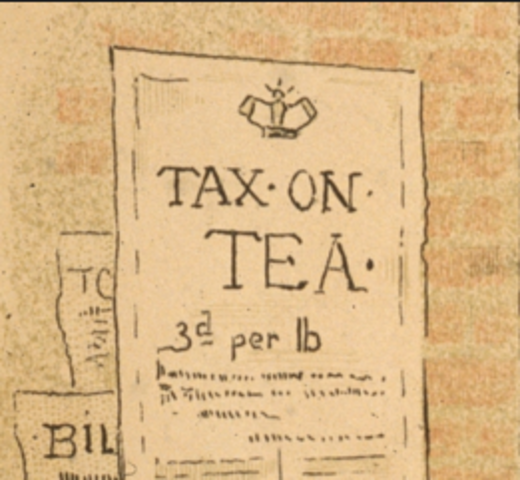
The Tea Act was passed by parliament on May 10th, 1773. The British East India Company had control on all the tea sales in the American colonies. The Tea Act was the final straw because of the unpopular policies and taxes imposed by Britain on American colonies. Ultimately, the Boston Tea party sparked the policy, then that triggered a “Powder Keg”. By passing the Tea Act, no new taxes were imposed upon the American colonists as a result of passing the Act. In 1767, the Townshend Revenue Act was passed, enforcing the tax on tea in order to serve the colonists’ needs. The Townshend Revenue Act also put a tax on other products such as glass, lead, oil, paint, and paper, in addition to tea. All taxes on commodities except tea were repealed under the Townshend Revenue Act in 1770 due to boycotts and protests. In order to maintain parliament’s taxing authority over the colonists, the tea tax was retained. The Intent of the Tea Act was not to anger American colonists. Instead, it was meant to be a bailout policy, to get the British East India Company out of debt. They were paying £400,000 per year to keep their contracts with the British government. Additionally, the British East Company suffered financially leading to unstable political and economic issues in India. The markets were weak in Europe due to debt from the French and Indian War along with other issues. The British East India company had a government sanctioned monopoly on tea, which made the American colonists angry, along with the Tea Act. On December 16, 1773, 340 chests of British East India Company Tea were dumped into Boston Harbor by the Sons of Liberty. The Tea Act finally ended in 1861, it became a “Dead Letter” as some say, and as far as the Thirteen colonies knew, was officially removed from the book at that time.
 Katelyn's blog